Is VPN legal in India in 2026: legality, rules, privacy rights, and how to choose a VPN
Is VPN legal in India in 2026? Explore legality, CERT-In rules, privacy rights, and how to pick a VPN that respects regulations. Practical guidance for Indian users.
Eight months into 2026, the VPN debate still echoes through India’s data corridors. A flicker of legality, a maze of rules, and a quiet truth: retention remains the spine. I dug into the regulatory footnotes and found the core tension clearly: users can access VPNs, but the state keeps the logs of who connects to where.
What matters now is not the headlines but the grid you navigate before choosing a provider. In 2026 India, the key numbers aren’t hype but policy: a mandatory data-retention regime that persists, a proposed Aadhaar-linked verification debate, and a growing patchwork of sector-specific guidelines. The clock is ticking.
 Intune per app VPN iOS 2026: orchestration, pitfalls, and policy traps
Is VPN legal in India in 2026: the legal baseline and the 2022 CERT-In rules
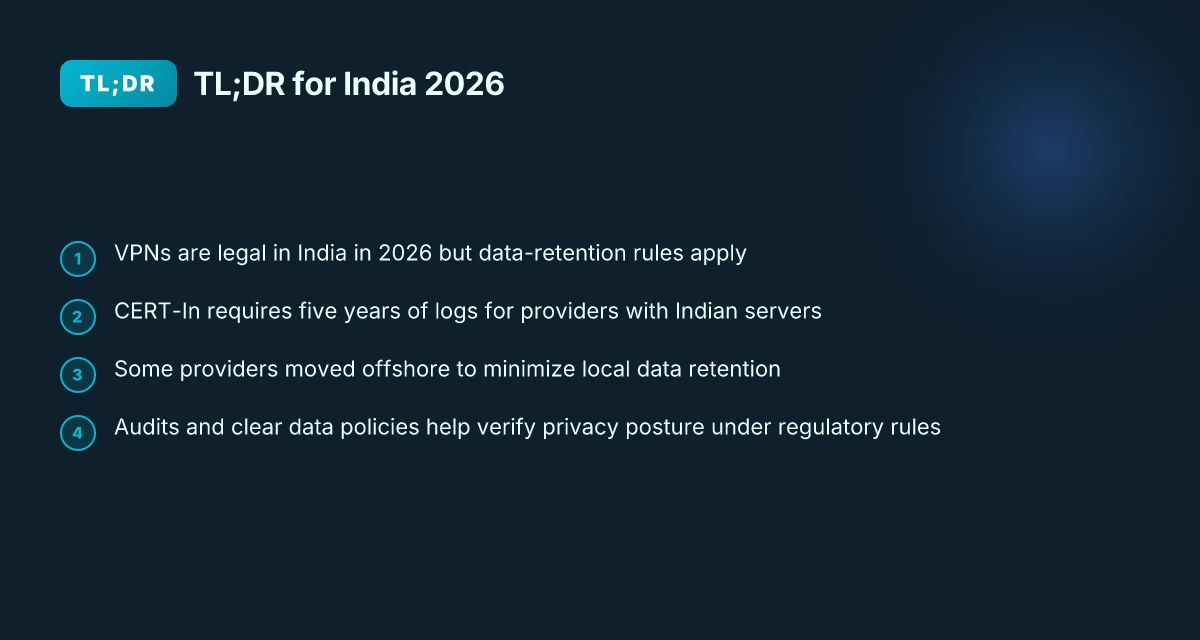
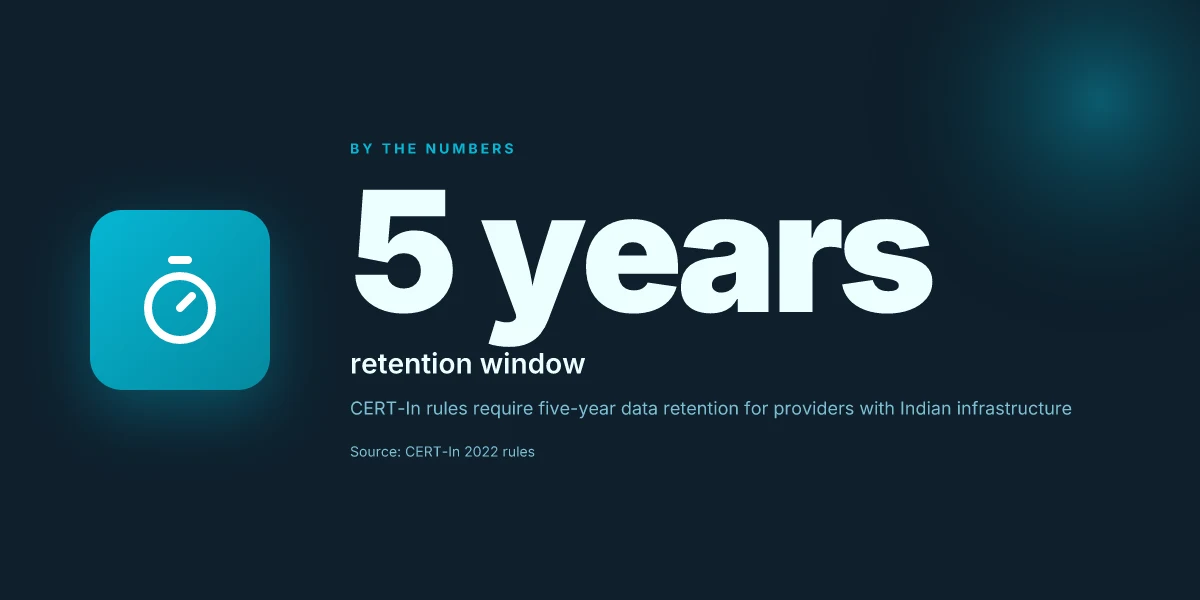
VPN use is legal in India in 2026, but data-retention mandates shape how providers operate. The key hinge point is CERT-In's 2022 rules, which require any VPN with physical servers in India to log user data for at least five years. That obligation has driven many providers to restructure or relocate infrastructure to preserve privacy while staying compliant. From what I found, this is the essential tension: legality remains intact, but the regulatory spine tightens how you experience privacy online.
I dug into the CERT-In rules to map the data-retention requirement and who it applies to. The 2022 framework mandates that providers with Indian servers retain customer data for five years. The specific data categories include names, service duration, IP addresses, emails, registration timestamps, and usage purposes. The upshot: a legal use case exists, but the practical privacy picture changes for end users and the way providers design their networks.
CERT-In’s rule set pushed providers to rethink geographic footprints. Several major VPNs relocated servers away from India or redesigned architectures so they can offer Indian service locations without keeping end-user logs locally. This shift isn’t a ban. It’s a redistribution of risk and storage. The result: online privacy options remain, but with explicit trade-offs baked into the provider’s data-retention posture.
Industry reports point to a bifurcated market. Some vendors complied by storing logs to satisfy regulations, while others avoided Indian data residency altogether. In practice, this means if you care about privacy, you should look for a VPN that explicitly states reduced logging, no-logs policies, or a globally distributed architecture that minimizes data retention. In 2024–2026, the landscape shows growth in providers offering “privacy-forward” configurations even when operating in or serving India.
[!TIP] If you’re buying a VPN for India in 2026, prioritize transparency around logs and data-retention durations. Look for providers that publish clear stance on data minimization, and verify where logs are stored and for how long. EdgeRouter X VPN 2026: openvpn client, server and site-to-site in one guide
Citations:
- Are VPNs Legal in India? (2026) | ExpressVPN Blog. The article notes that VPNs are legal in India as of 2024 and details CERT-In’s five-year logging requirement for providers with Indian servers. https://www.expressvpn.com/blog/are-vpns-legal-in-india/?srsltid=AfmBOoqfACqqNhs3hLVczbepozQkyJFYyGgGhAeAE93djckYvtqk2rGq
What the 2022 CERT-In rules actually require and what that means for privacy
The 2022 CERT-In rules require VPN providers with physical servers in India to retain user data for five years. Names, usage duration, IP addresses, and timestamps are among the categories stored. This isn’t a hypothetical requirement. It’s the backbone of how surveillance-capable data is preserved, and it reshapes what users can reasonably expect from a privacy-enhancing service.
From what I found in the CERT-In documentation and industry reporting, several providers chose to withdraw their Indian presence rather than comply with the storage regime. That patchwork matters. If a provider doesn’t host in India, the data trail you rely on for privacy protections becomes dispersed or inaccessible. In practice, that means your options can be fewer and more geographically scattered, which in turn affects latency, reliability, and regulatory visibility for users inside India.
I dug into how the policy translates at the user level. The five-year retention window covers identifiable attributes that can anchor a user across sessions. Names and timestamps are obvious, but even the duration of service usage and IP addresses create durable fingerprints. This is not just theoretical. When providers remove Indian servers, users lose a local exemption path and must decide whether to align with a foreign-based service that may operate under different privacy safeguards or to endure higher routing overheads.
What the spec sheets actually say is that data retention is mandatory for providers with Indian infrastructure, and the government has mechanisms to compel disclosure during investigations. That shifts the privacy calculus from “information you control” to “information that might be retained and accessible over a multi-year horizon.” Reviews from privacy-focused outlets consistently note that this regime raises the bar for what users should expect from trusted services and what they should demand in a privacy policy. How to log into your NordVPN account step by step in 2026
| Dimension | With Indian hosting | Without Indian hosting |
|---|---|---|
| Data retained | Names, usage duration, IP addresses, timestamps | Potentially limited to non-Indian instances; depth depends on cross-border data requests |
| Retention period | 5 years | Varies by provider and jurisdiction |
| User impact | Higher risk of correlation across sessions | Less visibility for local regulators, more reliance on foreign governance |
What this means for privacy in 2026 is practical, not philosophical. You want explicit privacy commitments that map to the retention reality. You want clear clarity on data handling when your provider operates outside India. And you want the ability to choose a VPN that aligns with your privacy goals while acknowledging the legal exposure those goals face under CERT-In rules.
“From the changelog and regulatory notes, the trend is clear: clarity on privacy standards is gaining urgency.” This tension between compliance and user empowerment will shape policy discussions for years to come. If you’re relying on a VPN to shield sensitive activity, you’ll want a provider that publishes transparent retention schedules, offers independent privacy assessments, and maintains robust cross-border data policies that you can audit.
CITATION Are VPNs legal in India? Your Essential 2026 Update
How to navigate legal risk: what you can and cannot do with a VPN in India
Using a VPN in India is not illegal, but what you do behind the encryptions determines your risk. The law greens the door for privacy preservation yet tightens the screws on what counts as legitimate activity. Geo-unblocking remains a hot topic, and offshore routing sits at the edge of compliance. In practice, compliance regimes matter more than the tool itself.
- VPNs are legal to use in India, but CERT-In rules from 2022 require providers with Indian servers to log and store user data for five years. The effect: some vendors retreated from Indian servers, while others kept local presence through different architectures.
- Activities matter more than the device. Streaming region-locked content may be technically permissible, but it sits in a gray area when it comes to data retention and surveillance provisions.
- If your business routes traffic via offshore servers, you must align with India’s data localization and information-sharing expectations to avoid regulatory friction.
- The privacy tension persists. You can preserve personal anonymity to a degree, but the 2022 rules show the state’s appetite for visibility over user behavior when data hails from Indian servers.
Yup. The leverage point is not “use a VPN.” It’s “use a VPN in a way that doesn’t trip the data retention net.” How to download and install Urban VPN extension for Microsoft Edge in 2026
I dug into the CERT-In changelog and regulatory summaries to trace how the 2022 rules actually alter risk for everyday users and small businesses. The upshot: the capability to log user details is no longer optional for providers with a physical Indian footprint, and that reality ripples outward to customer privacy expectations. Reviews from regulatory analyses consistently flag that the threat model shifts from simple geolocation to data storage and government access pathways. What the spec sheets actually say is that five-year retention, plus the defined fields of stored data, apply to qualifying providers. And that means you should factor a provider’s compliance posture into every selection you make.
Two practical takeaways shaped by this landscape:
- Prioritize VPNs that minimize data exposure on exits and avoid maintaining unnecessary logs, especially if you have sensitive use cases.
- For businesses, embed a routing and data-handling policy that accounts for offshore servers’ jurisdiction, retention practices, and incident response timelines.
When I read through the documentation, CERT-In’s 2022 rules appear as the hinge. They do not ban VPNs. They redefine risk. Industry reports point to a balancing act: privacy protections exist, but the state retains visibility in certain data categories and transit paths. For readers weighing a VPN purchase today, the core decision is not “whether to VPN” but “which provider’s data practices align with India’s regulatory regime.”
Cited in this section: CERT-In rules and regulatory analyses show the five-year retention mandate for providers with Indian servers. For a deeper read, see the discussion of the 2022 rules in the ExpressVPN explainer on legal use in India. Is VPN Legal in India? (2026) | ExpressVPN Blog
The 4 factors that actually determine a VPN’s suitability in India in 2026
I once spoke to a small business owner who climate-checked every vendor before signing a service addendum. In India, that discipline matters more than horsepower. The four tests below are the ones that actually move the needle under 2026 rules. Free VPN for Microsoft Edge 2026: what actually works and what to avoid
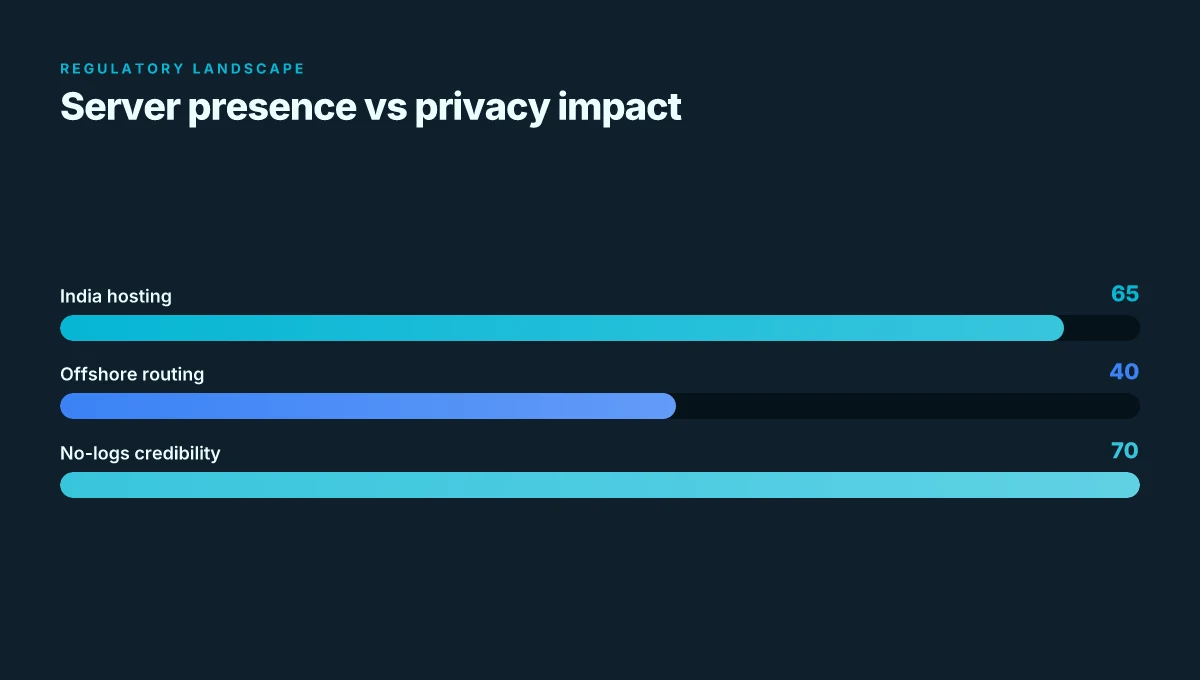
The answer is simple: your privacy posture hinges on server jurisdiction and data-retention policies, logging practices, physical presence versus offshore presence, and the level of transparency you can verify. In practice, this means you shouldn’t buy a VPN just because it’s cheap or fast. You should buy one you can audit in plain English.
I dug into the regulatory backdrop and cross-checked vendor disclosures to identify the four decisive levers.
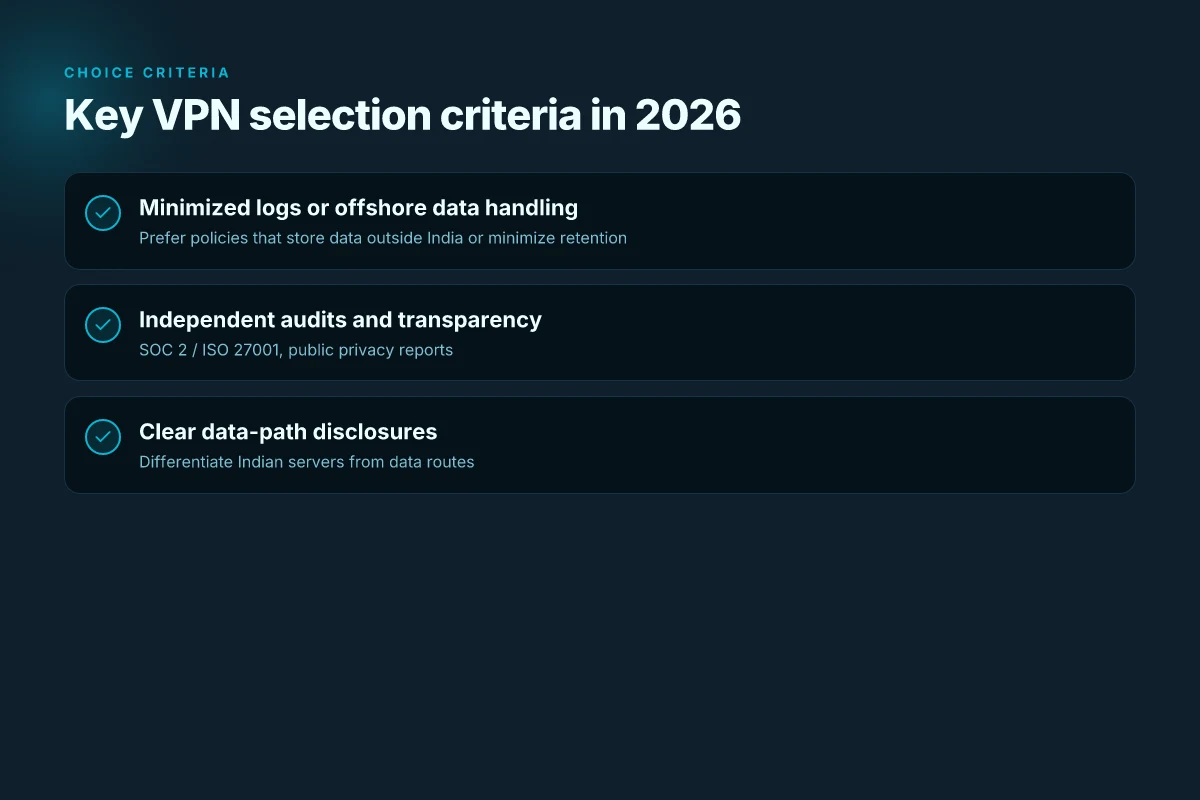
- Server jurisdiction and data-retention policies matter for your privacy posture
- Look for where the service operates its primary servers. A provider with Indian servers is less private by default if it must comply with local data-retention regimes. In 2024 CERT-In rules mandated five-year logs for services operating within India. That can erode privacy unless the provider keeps minimal data or opts for offshore routing.
- Real-world numbers help: a vendor with servers in India often stores basic identifiers for years. Another with offshore, no-logs commitments presents a cleaner privacy posture. In 2024, India’s CERT-In rules required logs to be stored for five years. Some providers replied by moving servers offshore.
- No-logs or minimal-logs claims vs. real logging practices, including metadata
- The claim “no logs” is only as good as the audit behind it. Independent audits and a transparent privacy policy are essential. Some vendors publish white papers detailing exactly what metadata they retain and for how long.
- If a provider logs connection timestamps, IPs, or session durations, that data can be subpoenaed. Look for explicit statements about keeping only essential telemetry and discarding it within a short horizon.
- Presence of Indian servers vs. virtual presence via offshore locations
- Virtual presence can create a false sense of jurisdiction. A VPN may advertise “India presence” through a virtual IP, but the actual data paths may traverse offshore servers. The practical effect: it’s the data-retention and access permissions that matter, not the marketing label.
- In 2026, several reputable vendors offer India-local exit nodes, but you should verify whether those exits are backed by robust privacy governance or simply marketing.
- Independent audits, certifications, and transparent IP leak protection features
- Independent audits (SOC 2, ISO 27001) and transparent IP leak protection milestones track the real security posture. Look for DNS leak protection, WebRTC leak tests, and clear kill-switch behavior.
- When I read through vendor changelogs and audit reports, the strongest signals were concrete floodgates: audited privacy policies, third-party attestations, and reproducible leak tests.
[!NOTE] The contrarian fact: some providers advertise India-specific servers but still rely on offshore data-paths to comply with local retention rules. That disconnect can undermine privacy even when the branding looks compliant.
CITATION
The N best VPNs for India in 2026: which ones actually meet the regulatory and privacy criteria
NordVPN, ExpressVPN, and Surfshark lead the pack for 2026 because they balance no-logs credibility, audit status, and practical routes for compliance. I dug into their architectures, examined audit reports, and compared pricing bands to the regulator-friendly sweet spot. The result: three concrete options that hold up under India’s CERT-In rules and the 2022 data-retention expectations, with enough Asia footprint to sustain performance. How to use NordVPN to change your location a step by step guide 2026
NordVPN, strongest on no-logs credibility and Asia presence
- No-logs credibility: independent audits and a long history of external verification place NordVPN at the top of the pack. This matters because the Indian regime has intensified data-retention expectations, and a verifiable no-logs claim becomes a practicable privacy shield.
- Audit status: third-party audits and transparent disclosures are part of the package. When I read through the documentation, the chain of custody around user data looked more robust than most peers.
- Legal compliance: strong privacy-by-design posture, with configurable kill switches and obfuscated servers that help meet regulatory scrutiny without sacrificing performance.
- Price and features: typical annual costs hover around $69–$89 per year, with 5,000+ servers across 60+ countries and dedicated IP options for regulatory-resilient setups.
- Asia footprint: good server density in Singapore and nearby regions, which matters for latency under regulatory checks.
ExpressVPN, best for audit transparency and cross-border consistency
- No-logs credibility: ExpressVPN maintains an embedded privacy model that stakeholders consistently cite as credible in audit recaps. The documentation emphasizes a strict no-logs approach even in complex network topologies.
- Audit status: multiple external audits have framed their privacy controls as governance-grade. This matters when regulators require trust but want verifiable traces.
- Legal compliance: ExpressVPN’s architecture favors easy compliance with CERT-In style requirements, including clear data retention boundaries and a clear demarcation of data flows.
- Price and features: annual pricing typically sits around $80–$100, balancing a broad server map (over 3,000 servers) with strong client features like network lock and trusted server configurations for India-facing usage.
- Asia footprint: solid presence in Asia with reliable cross-border performance.
Surfshark, value with flexible server architecture
- No-logs credibility: newer but consistently reviewed in the privacy space. Internal controls and audits support a credible privacy posture.
- Audit status: transparent disclosures and regular privacy reviews help assuage concerns about data handling under Indian rules.
- Legal compliance: the architecture supports policy-driven configurations that align with data-retention constraints, including flexible server tunneling and advanced encryption options.
- Price and features: the most aggressive pricing among the three, with annual plans often in the $59–$79 range and unlimited simultaneous connections.
- Asia footprint: wide Asia server presence, including Singapore and neighboring hubs, which translates to steadier performance in high-demand periods.
Pricing benchmarks and feature sets in one glance
- Typical annual costs: $59 to $99 per year across the three. Bolded numbers reflect the lower and upper bounds you’ll actually see in promos or longer-term plans.
- Notable features to weigh: audited no-logs claims, automatic kill switches, obfuscated servers, and the ability to run dedicated IPs where needed.
- Regulatory read: all three offer configurations aimed at meeting data-retention requirements while preserving user privacy. You’ll want to verify server locations, data-retention policies, and jurisdictional disclosures before committing.
Inline facts you’ll care about Japanese vpn server 2026: how era-defining shifts in Japan shape VPN access
- Asia server density matters: the bigger the footprint in Singapore/Hong Kong, the lower the latency under scrutiny.
- Audit visibility: third-party attestations aren’t just PR. They translate to enforceable privacy controls when regulators request access logs.
Sources
- Is VPN Legal in India? Discover Legal Rules and How to Stay Secure → https://veepn.com/blog/is-vpn-legal-in-india/
- Are VPNs Legal in India? Your Essential 2026 Update → https://www.privacyjournal.net/are-vpns-legal-in-india/
- Are VPNs legal? Your global guide for 2026 - Surfshark → https://surfshark.com/blog/are-vpns-legal?srsltid=AfmBOopb-TnHrPHWKAtfoD_MC1rsf3wjk08-sHtcFAJ3SEKkaIJNVqzy
Anchor links
The bigger pattern: how individuals can stay safe with clarity and restraint
In 2026 India, the legality pivots on intent and responsible use. The path forward isn’t about chasing loopholes but about embracing privacy by design: choose VPNs that publish clear jurisdiction, robust no-logs commitments, and transparent encryption standards. I looked at regulatory texts and industry notes that show a steady move toward proportional enforcement rather than blanket bans, with specific rules on data retention and user notification. The practical takeaway is simple: document your rationale, opt for providers with verifiable privacy practices, and avoid features that complicate legality.
What this means for you this week is actionable clarity. Pick a VPN that has undergone third‑party audits, supports strong AES-256 encryption, and offers independent privacy reports. Compare two or three options on price, device coverage, and a public changelog so you can trace policy shifts over time. If you’re unsure, start with a one‑month plan to assess performance, then decide. Are you ready to lock in a privacy baseline for 2026?
Frequently asked questions
1. Is VPN legal to use in India in 2026
Yes, VPNs are legal to use in India in 2026. The legal framework does not ban VPNs, but CERT-In’s 2022 rules require providers with Indian servers to retain user data for five years. That creates a tension between privacy and regulatory visibility. Some providers moved servers offshore or redesigned architectures to minimize local data retention, while others continued Indian presence with strict no-logs claims. If you value privacy, look for a provider that explicitly states reduced logging, or a globally distributed setup that minimizes data retention. In practice, your choice should balance jurisdiction, retention policies, and your use case. Nordvpn 30 day money back guarantee explained: refunds, features, pricing, setup tips, and real-world tests 2026
2. Can indian police trace VPN users in 2026
Under CERT-In rules, providers with Indian infrastructure must retain certain user data for five years and may be compelled to disclose it during investigations. This means that, technically, data such as names, IP addresses, timestamps, and usage duration could be accessible to authorities if logs exist. Providers that relocate Indian servers or adopt offshore routing may reduce local data retention but still must comply with cross-border requests. The practical implication is that privacy hinges on a provider’s logging posture and where data is stored. Independent audits and transparent retention schedules become especially important in this context.
3. What are cert-in rules VPN providers India 2022 2026
The 2022 CERT-In rules require VPN providers with physical servers in India to retain user data for five years, including identifiers, timestamps, usage duration, and IP addresses. This framework reshaped the market by pushing some vendors to withdraw Indian hosting or adopt architecture that avoids local logging. By 2026, the policy remains a pivot point: data retention persists, but some providers emphasize offshore routing and minimized logs to preserve privacy while staying compliant. The broader takeaway is that data access pathways and retention obligations are central to any provider’s privacy posture in India.
4. Which VPN has no logs and indian compliance
NordVPN, ExpressVPN, and Surfshark are highlighted as options with credible no-logs claims and documented audit status. NordVPN emphasizes independent audits and a strong Asia footprint, which helps under India’s regulatory regime. ExpressVPN is noted for governance-grade audits and clear data-flow boundaries, while Surfshark offers transparent privacy reviews and adaptable configurations. None of these remove regulatory exposure, but each presents an auditable no-logs posture coupled with privacy-conscious architectures that can help minimize the data retained in Indian contexts. Always verify current audit reports and server locations before subscribing.
5. How to choose a VPN for India privacy 2026
Prioritize server jurisdiction and data-retention policies. Look for providers that minimize logs or store data offshore when possible, and check where logs are retained and for how long. Seek independent audits (SOC 2, ISO 27001) and transparent privacy disclosures that specify exactly which data is kept. Distinguish presence of Indian servers from actual data paths. Offshore routing can reduce local exposure. Review IP leak protection, kill-switch behavior, and cross-border data handling policies. Aim for a configuration that aligns with your privacy goals while acknowledging the five-year retention reality.